
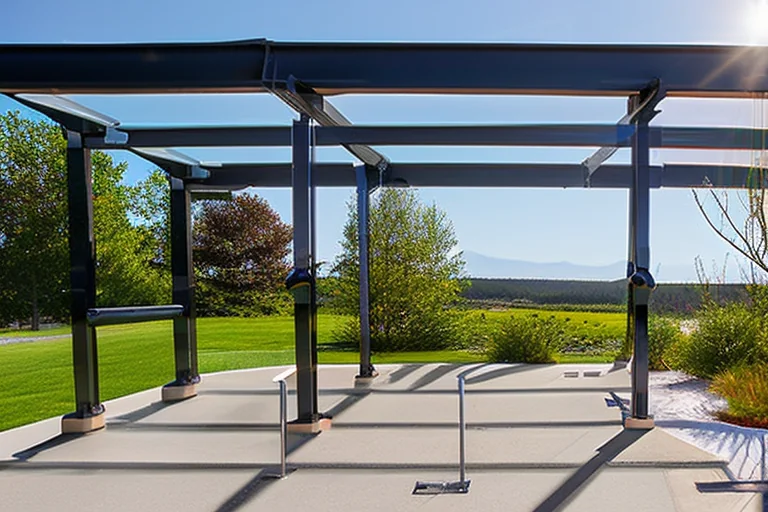
When you envision a grand polycarbonate canopy stretching over a stadium entrance, a sprawling train platform, or a modern corporate atrium, the focus is often on its sleek transparency, dramatic form, and functional shelter. However, the true mark of a successful large-scale installation isn’t just in its initial beauty, but in its silent, enduring performance years later. This longevity hinges on a fundamental engineering principle often invisible to the end-user: the meticulous management of expansion and contraction. Forgetting to properly accommodate the natural movement of polycarbonate is not a minor oversight; it is the single most common cause of premature failure in large canopy projects, leading to cracked sheets, distorted frames, leaking joints, and costly repairs. As a material celebrated for its strength and flexibility, polycarbonate demands that we design with its dynamic nature in mind from the very first sketch.
The Science of Movement: Why Polycarbonate Needs Room to Breathe
Polycarbonate, like all materials, expands when heated and contracts when cooled. This coefficient of thermal expansion is a fixed physical property. For multi-wall polycarbonate sheets commonly used in canopies, this coefficient is approximately 0.065 mm/m/°C (0.000065 in/in/°F). While this number seems small, its impact over a large area and a wide temperature swing is substantial. Consider a 20-meter (65-foot) long sheet of polycarbonate installed on a cool morning at 10°C (50°F). On a hot summer afternoon, the surface temperature of that dark sheet in direct sunlight can easily reach 70°C (158°F) or more—a delta of 60°C (108°F). Plugging into the formula, that single sheet wants to expand by nearly 78 millimeters, or over 3 inches. If the sheet’s edges are rigidly clamped or fastened without provision for this movement, immense compressive stress builds up. The polycarbonate, with nowhere to go, will buckle, warp, or transfer that force to the fasteners and supporting structure, leading to failure.
Consequences of Ignoring Expansion Joints
The failures stemming from inadequate expansion management are both structural and aesthetic. The most immediate sign is often oil-canning or visible rippling across the surface of the panels. This is followed by stress whitening at fastener points—a telltale sign of material yielding. Eventually, fasteners can pull through the material or shear off, and in severe cases, panels can crack explosively. For architectural suspended canopy systems, which rely on precise tension and clean lines, uncontrolled movement can distort the entire geometry, causing sagging or uneven stress on suspension points. Furthermore, sealants used in the joints will be overstretched or over-compressed, breaking the weathertight seal and allowing water infiltration, which can damage underlying structures and create maintenance headaches.
Designing for Dynamics: Key Considerations for Expansion Joints
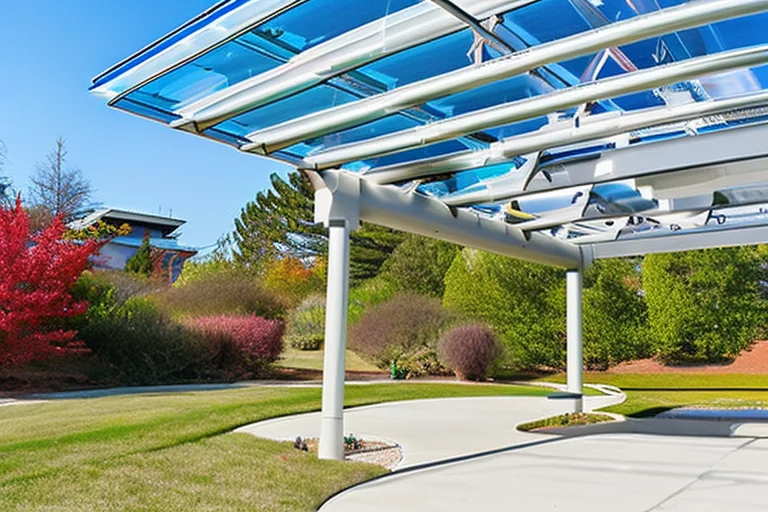
Effective expansion joint management is not an afterthought; it is an integral part of the design phase. The first step is calculating the total anticipated movement. This requires knowing the maximum and minimum expected *in-service* temperatures of the polycarbonate, not just the ambient air temperature. A dark-tinted sheet in full sun has a much higher operating temperature than a clear one. Once the total movement is calculated, the design must accommodate it through a combination of panel sizing, joint placement, and specialized hardware.
Joint Spacing and Sizing
A critical rule is to never run polycarbonate sheets continuously over an expansion joint in the primary building structure. The canopy’s expansion joints must align with the building’s. For long runs, intermediate expansion joints within the canopy system itself are necessary. A general guideline is to incorporate expansion joints at intervals not exceeding 30 feet (9 meters) in length, or as dictated by your specific calculation. The width of the gap itself must be sized to handle the total movement plus a safety factor. The joint is not just an empty space; it requires a proper cover flashing or expansion joint profile designed for polycarbonate systems. These profiles allow the panels to move independently while maintaining a weatherproof seal.
Strategic Placement and Detailing
Placement is as important as size. Joints should be located at natural breaks in the visual flow or where supported by underlying structural elements. Details at perimeter conditions are paramount. Polycarbonate should never be hard-against a wall or curb. A perimeter gap, typically covered by a trim or flashing, must be provided to allow for both thermal movement and potential drainage. The fastening system is equally crucial. Screws should always be placed in oversized, slotted holes that allow the panel to slide relative to the fastener shaft. Washers used should be large-diameter, UV-stabilized plastic or metal with a soft sealing ring to distribute load and accommodate slight angle changes without compromising the seal.
Installation Best Practices and Common Pitfalls
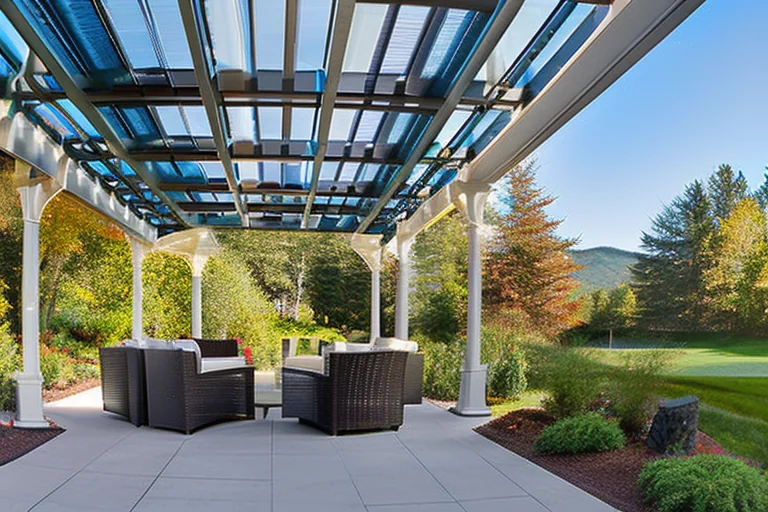
Even the most perfectly designed system can fail if installed incorrectly. Installation must be planned for the expected median temperature range. Ideally, polycarbonate should be installed during moderate temperatures, not during extreme heat or cold, to center its movement range. During installation, every fastener must be checked to ensure it is centered in its slotted hole and not overtightened. Overtightening is a frequent error that pinches the panel, creating a stress point and eliminating its ability to move. All protective films should be removed promptly after installation to prevent adhesive bonding and to allow even thermal exposure.
Sealant Selection and Application
Sealants used in expansion joints must be specifically designed for high movement capability. Standard silicone or polyurethane may not have the necessary elongation and recovery properties. Use a high-performance sealant rated for the calculated movement, plus a margin. The joint must be properly primed (if required by the sealant manufacturer) and backer rod of the correct size must be used to create the proper hourglass sealant profile, ensuring adhesion to the sides of the joint and not just the top and bottom. For a deeper dive into ensuring a flawless installation from start to finish, our complete guide to professional canopy services covers these critical execution phases in detail.
Pitfalls to Avoid
Beyond overtightening, common pitfalls include using the wrong type of fastener (e.g., standard wood screws instead of machine screws with proper washers), failing to account for movement in all directions (polycarbonate expands in both length and width), and neglecting the effects of shade and sun exposure variations across a single canopy, which can create differential movement. Another oversight is not considering the movement of the supporting structure itself; aluminum framing also expands and contracts, and its movement must be coordinated with that of the polycarbonate cladding.
Ensuring Long-Term Performance and Aesthetic Integrity
A well-executed expansion joint strategy is invisible in a successful installation. The canopy performs silently, shedding water, withstanding thermal cycles and wind loads, and maintaining its crisp lines for decades. Regular maintenance inspections should include checking expansion joints for any signs of sealant degradation, debris blockage, or restriction of movement. By respecting the material’s inherent properties and designing systems that work with nature rather than against it, architects and builders unlock the full potential of polycarbonate. It allows for the creation of breathtaking, expansive, transparent forms that are as durable as they are beautiful, standing as a testament to thoughtful, precision engineering.
Don’t let thermal movement compromise your next visionary project. Understanding these principles is the first step toward a flawless build. For expert guidance tailored to your specific design, contact our canopy experts today. We can help you navigate every detail, from initial concept to final installation. Browse our complete polycarbonate canopy collection to explore the materials and systems designed for performance at scale, and schedule your free design consultation to turn your architectural vision into a durable, long-lasting reality.