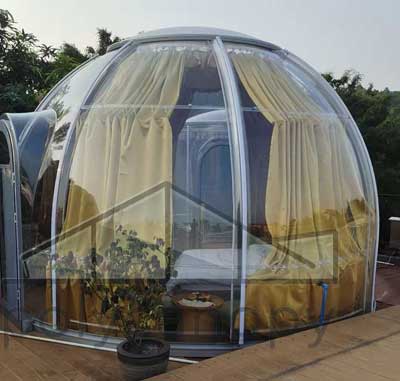
Starry sky domes—transparent outdoor shelters that provide panoramic views of the night sky—have become increasingly popular over recent years. Used at glamping resorts, hotels, and high-end residential projects alike, these domes combine architectural aesthetics with material technology; using polycarbonate sheet 3mm transparent grade for both structural integrity and visual experience.
1. Why Polycarbonate Is Used to Construct Starry Sky Domes
Polycarbonate is an innovative thermoplastic material renowned for its exceptional combination of impact resistance, transparency, and UV stability—qualities which make it the go-to material in designing starry sky domes. Keeping these properties intact during construction ensures full transparency over the span of its useful lifetime despite exposure to extreme temperatures, direct sunlight, wind loads, or snow loads—while still remaining fully transparent for stargazing.
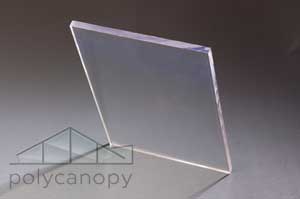
Polycarbonate solid sheets offer up to 250 times higher impact strength compared to glass while being much lighter, making polycarbonate domes safer for occupants and easier to assemble, transport, and maintain. Furthermore, its thermoformed shape makes polycarbonate an excellent material choice for geodesic designs.
2. Preferred Thickness for Dome Structures
Medium-sized dome structures typically utilize 3mm thickness as an optimal compromise between strength, flexibility, and light transmission. Thicker panels may reduce optical clarity while increasing weight, which complicates installation over curved frames.
The 3mm polycarbonate solid sheet provides impact resistance of 200 J and light transmittance up to 88–90%, making it suitable for applications like transparent canopies, skylights, and outdoor domes.
3. Understanding UV Protection
Polycarbonate’s primary enemy is UV degradation, which leads to yellowing, haze formation, and reduced mechanical strength over time. To combat this threat, manufacturers typically apply an ultraviolet protective coating or co-extrude UV-stabilized layers during production.
High-quality domes should use UV-protected sheets with dual-sided protection to ensure optimal sun coverage across their geometry. This provides 360° protection from photo-oxidation and maintains optical clarity for over 10 years in high UV environments.
GOODLIFE’s 3mm Polycarbonate Solid Sheet for Roofing and Insulation provides customizable UV content and dual-side UV protection, meeting all long-term performance requirements of outdoor domes.
4. Mechanical and Optical Advantages
Polycarbonate’s elastic modulus of around 2.3 GPa and its ability to absorb energy without cracking make it one of the strongest transparent materials available, giving structural engineers freedom to design panoramic domes with smaller frame supports.
Optically, polycarbonate sheets offer minimal distortion and consistent light diffusion to maximize the stargazing experience inside a dome. Anti-condensation coatings may also be applied to prevent water droplets from blocking visibility on cold or humid nights.
5. Comparison: Polycarbonate, Acrylic (PMMA), and Glass
| Property | Polycarbonate | Acrylic (PMMA) | Glass |
|---|---|---|---|
| Light Transmittance | Up to 90% | 92% | 91% |
| Impact Strength | 250× stronger than glass | 20× stronger | Low |
| Thermal Stability | −40°C to +120°C | −30°C to +90°C | −50°C to +80°C |
| Density | 1.2 g/cm³ | 1.18 g/cm³ | 2.5 g/cm³ |
| UV Protection | Fully customizable / Dual-sided | Limited | External coating needed |
| Thermal Expansion | Low–Moderate | Moderate | Low |
| Formability (Curving) | Excellent | Good | Poor |
| Cost-Efficiency | High | Medium | Low |
| Recyclability | Yes | Yes | Yes (limited) |
6. Design and Installation Considerations
When creating a starry sky dome, careful consideration must be given to panel curvature, joint sealing, UV orientation, and thermal expansion. Panels should face outward with their UV-protected sides exposed. Gasket or aluminum framing systems must accommodate for natural expansion and contraction.
For improved insulation and comfort, polycarbonate panels can be combined with infrared reflective coatings or low-e films, enabling temperature regulation while maintaining transparency.
7. Long-Term Performance and Sustainability
Polycarbonate structures often last over 15 years with minimal optical degradation. Double-sided UV coatings significantly delay aging caused by sunlight exposure. Furthermore, the material is 100% recyclable, fitting seamlessly within modern eco-living trends and sustainable architecture initiatives.
GOODLIFE’s flexible production capabilities enable customization of UV content levels according to regional UV indices, ensuring optimized performance in tropical, desert, or alpine environments.
Conclusion
3mm UV-protected polycarbonate solid sheets represent the perfect integration of aesthetics, engineering, and long-term performance in contemporary starry sky dome architecture. Lightweight yet strong and crystal-clear, they create immersive outdoor environments that connect humans with nature both day and night.
By choosing high-quality, customizable materials such as GOODLIFE’s polycarbonate panels, architects and builders can ensure long-term beauty, clarity, and safety in their dome projects.