
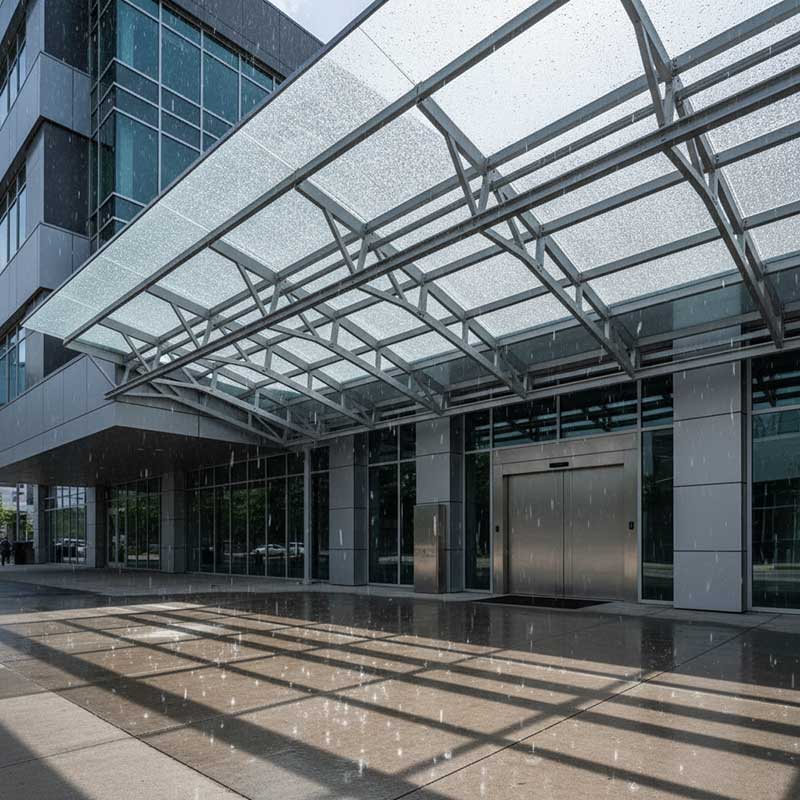
When designing a polycarbonate canopy — whether for a commercial entrance, residential patio, or pedestrian walkway — the choice of roofing panel determines how long the structure lasts, how much natural light it admits, and how well it withstands severe weather. Among the many options on the market, 3mm solid polycarbonate sheet has emerged as one of the most popular choices for canopy builders and architects worldwide. In this guide, we take a deep look at the material’s properties, compare it with alternatives, and show you how to get the best results for your canopy project.
What Is 3mm Solid Polycarbonate Sheet?
A solid polycarbonate sheet is a single-layer, monolithic panel made from polycarbonate resin — the same engineering thermoplastic used in bulletproof glazing and aircraft windows. Unlike multiwall (hollow) polycarbonate, the solid variant has no internal channels. At 3mm thickness, it strikes a practical balance between rigidity and flexibility: stiff enough to span typical canopy rafter spacings of 600–800mm, yet flexible enough to be cold-bent into gentle curves without thermoforming.
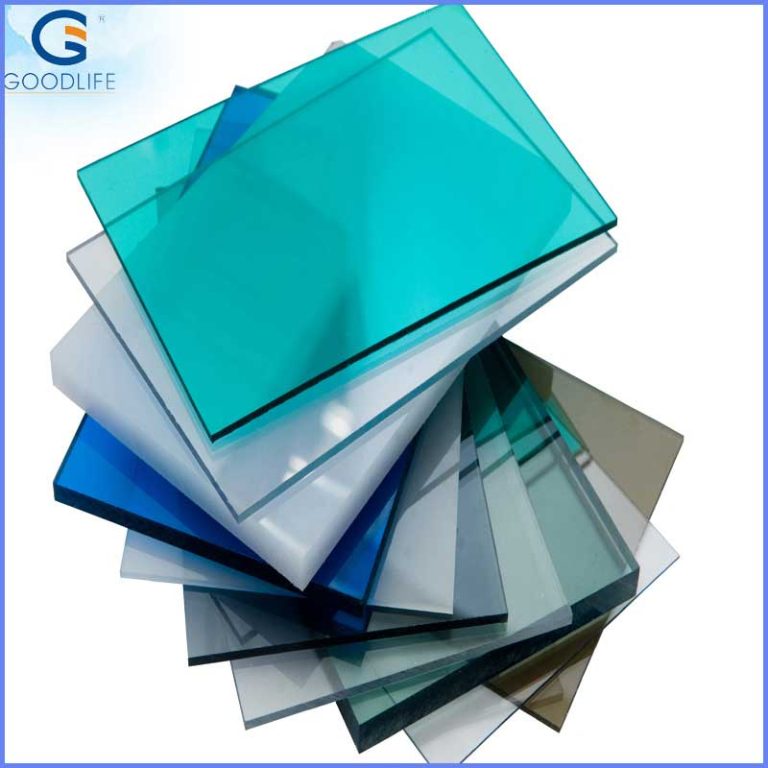
High-quality 3mm solid sheets, such as the 3mm polycarbonate solid sheet from GOODLIFE, are co-extruded with a UV-protective layer on one or both sides. This UV layer is what separates a panel that yellows in two years from one that stays clear for a decade or more.
Key Properties That Make 3mm Polycarbonate Perfect for Canopies
Exceptional Impact Resistance
Polycarbonate is roughly 250 times stronger than standard glass and 30 times stronger than acrylic of the same thickness. For canopy applications, this translates directly into hail resistance, vandal resistance, and the ability to handle accidental impacts from falling branches. A 3mm solid panel can absorb significant point-load energy without cracking or shattering, which makes it far safer than glass in overhead installations where broken shards could fall on people below.
High Light Transmission
One of the main reasons property owners install polycarbonate canopies — rather than opaque metal roofs — is to preserve natural daylight. A clear 3mm solid polycarbonate sheet typically transmits around 88–90% of visible light, which is comparable to float glass. Tinted versions (bronze, blue, green, and opal) are also available for applications where glare reduction or aesthetic styling is more important than maximum brightness. Bronze-tinted panels, for instance, are a popular choice for entrance canopies because they reduce solar glare while still allowing comfortable levels of diffused light underneath.
Built-In UV Protection
Prolonged UV exposure is the number-one enemy of plastic roofing materials. Unprotected polycarbonate will yellow, become brittle, and lose impact strength within a few years. That is why reputable manufacturers apply a co-extruded UV-blocking layer — typically 50 microns thick — during the extrusion process. This layer filters out harmful UV radiation and protects the base resin underneath. When sourcing panels for your canopy, always verify that the sheet carries a co-extruded (not coated) UV layer, as co-extruded layers are bonded at a molecular level and cannot peel or wash off.
Lightweight Design Advantage
A 3mm solid polycarbonate panel weighs approximately 3.6 kg/m², compared to roughly 7.5 kg/m² for 3mm glass. That 50% weight saving has a cascading effect on the entire canopy structure: lighter rafters, smaller column sections, simpler foundations, and easier handling during installation. For large-span canopies — such as those covering hotel driveways or shopping-center walkways — the material weight reduction can translate into substantial savings on the steel or aluminum subframe.
Thermal Insulation and Weather Performance
Although a single 3mm solid sheet does not insulate as well as a multiwall panel, it still outperforms glass by a measurable margin. Polycarbonate has a thermal conductivity of about 0.20 W/m·K versus 1.0 W/m·K for glass, meaning less heat transfers through the panel by conduction. Combined with the panel’s ability to withstand temperatures from −40 °C to +120 °C without warping, 3mm solid polycarbonate is suitable for canopy installations in virtually any climate zone.
3mm Polycarbonate vs. Other Canopy Roofing Materials
Polycarbonate vs. Glass
Tempered or laminated glass remains a premium canopy material, but it comes with significant drawbacks. Glass is heavy, expensive to fabricate with curved profiles, and — despite tempering — can still shatter into fragments under extreme impact. Polycarbonate delivers comparable optical clarity at a fraction of the weight and cost, with far superior impact performance. The main advantage of glass is its scratch resistance; polycarbonate is softer and can be scratched more easily, though modern hard-coated versions have narrowed this gap considerably.
Polycarbonate vs. Acrylic (PMMA)
Acrylic sheets offer excellent optical clarity and better scratch resistance than polycarbonate, but they are significantly more brittle. Under impact or rapid temperature change, acrylic can crack in a way that polycarbonate simply does not. For overhead canopy use — where safety is paramount — polycarbonate is almost always the preferred choice.
Polycarbonate vs. Metal Roofing
Metal roofing (steel or aluminum) is durable and low-maintenance, but it blocks all natural light. If your canopy design calls for a bright, open feel underneath, metal is not an option. Many modern canopy projects use a hybrid approach: metal framing with polycarbonate infill panels, combining the structural strength of metal with the light-transmitting properties of polycarbonate.
Best Applications for 3mm Solid Polycarbonate Canopies
Commercial Entrance Canopies
Hotels, office buildings, retail stores, and hospitals frequently use polycarbonate entrance canopies to protect visitors from rain and sun while maintaining a welcoming, light-filled appearance. The 3mm thickness is sufficient for most entrance canopy spans when properly supported, and the material’s clarity helps showcase architectural lighting mounted above the canopy at night.
Residential Patio and Terrace Covers
Homeowners looking for an affordable yet attractive patio cover often turn to 3mm solid polycarbonate. It allows them to use outdoor living spaces in light rain, reduces direct sun exposure, and is easy to install on a simple aluminum or timber pergola frame. Tinted bronze or grey panels are especially popular in residential settings, as they add a warm aesthetic tone while cutting down solar heat gain.
Walkway and Corridor Shelters
University campuses, industrial parks, and hospital complexes benefit from covered walkways between buildings. 3mm solid polycarbonate is ideal here because the long, narrow geometry of walkway canopies means individual panel spans are relatively small. The lightweight panels reduce dead load on extended-run structures, and their high clarity ensures that walkways feel open and safe rather than dark and enclosed.
Carport and Parking Canopies
Carport canopies need to handle hail, falling debris, and sustained UV exposure. The 3mm solid polycarbonate sheet checks all these boxes. In areas prone to heavy hail, some designers may step up to 4mm or 5mm solid sheets, but for most regions, 3mm provides more than adequate protection while keeping costs in check.
Installation Tips for 3mm Polycarbonate Canopy Panels
Allow for Thermal Expansion
Polycarbonate expands and contracts more than glass or metal. As a general rule, allow 3mm of expansion gap per linear meter of panel length. All fixing holes should be drilled 2–3mm oversized, and panels should never be clamped rigidly at both ends. Use slotted holes or proprietary polycarbonate fixing buttons that permit movement.
Install with the UV Layer Facing Outward
This sounds obvious, but it is one of the most common installation mistakes. The UV-protected face must face the sky. Most quality sheets are marked with a printed protective film indicating which side is the UV side. Fitting the panel upside down means the UV layer faces inward and the exposed surface will degrade rapidly.
Use Compatible Sealants and Gaskets
Silicone-based sealants are generally safe for polycarbonate. Avoid solvent-based sealants, PVC gaskets, or any product containing plasticizers, as these can cause stress cracking at the edges of the sheet. EPDM rubber gaskets are a safe and widely available choice for canopy glazing systems.
Support Spacing and Minimum Bend Radius
For a flat canopy installation with 3mm solid polycarbonate, a maximum unsupported span of around 500–700mm is recommended, depending on the expected wind and snow loads. If you intend to cold-bend the panels into an arched profile, the minimum bending radius should not be less than 150 times the sheet thickness — which is 450mm for a 3mm panel. Bending tighter than this can induce internal stress and reduce the panel’s service life.
How to Choose a Quality 3mm Polycarbonate Sheet for Your Canopy
Not all polycarbonate sheets are created equal. Here are the factors that separate a premium panel from a budget one that may fail prematurely.
First, check the raw material source. Sheets produced from virgin polycarbonate resin — especially from suppliers like Covestro (formerly Bayer) or SABIC — deliver consistent optical clarity, impact strength, and long-term UV stability. Recycled-resin sheets may look similar when new but tend to yellow faster and have lower impact resistance.
Second, confirm the UV protection method. Co-extruded UV layers (50 microns on the weather side) are the industry standard for outdoor applications. UV-mixed or UV-coated sheets are inferior alternatives that degrade faster.
Third, look at the manufacturer’s warranty. Reputable producers offer 10-year warranties against yellowing and loss of light transmission. If a supplier cannot provide this, consider it a red flag.
For canopy projects where material quality is critical, we recommend evaluating options from established polycarbonate manufacturers. A well-engineered 3mm solid polycarbonate sheet with co-extruded UV protection will maintain its clarity and strength throughout the life of your canopy structure, protecting both your investment and the people underneath it.
Conclusion
3mm solid polycarbonate sheet is one of the most versatile and cost-effective materials available for canopy roofing today. It delivers the light transmission of glass with the impact resistance of engineering plastic, at roughly half the weight. Whether you are building a small residential patio cover or a large commercial entrance canopy, 3mm solid polycarbonate offers the performance, safety, and longevity that overhead applications demand. By selecting a high-quality panel with proper UV protection and following sound installation practices, your polycarbonate canopy can provide reliable, transparent shelter for well over a decade.